

An investor-focused read of the Cleveland and Northeast Ohio market: rent dynamics, build economics, the renovation vs ground-up decision, and the incentive stack that defines viable urban infill.
Cleveland and Northeast Ohio remain one of the most overlooked long-term value plays in American real estate. Median home values sit roughly 60% below the national average while rents continue to climb, and a quietly maturing incentive landscape now lets disciplined operators build new housing at a basis the coasts simply can't match. This report frames what we are actually seeing on the ground.
Current Market Conditions
The headline number for any investor evaluating Northeast Ohio is affordability. Cleveland's median home price has held near $155,000 through 2026 while the national figure has climbed past $400,000. That spread isn't an artifact of distress — it reflects a regional market that never participated in the coastal price acceleration of the last decade. Rents tell a different story: the metro is now the third-fastest growing single-family rental market in the country, with year-over-year SFR growth at 9.4% even as for-sale price growth remains moderate.
Apartment rents follow the same pattern. Average Cleveland apartment rent sits at $1,561, roughly 25% below the national average across every unit type. That spread is the engine of the regional rental thesis: pricing well below national means low vacancy, short days-on-market for quality product, and rent growth that can compound without choking demand.
Amanah Consulting · Market Intelligence
Cleveland & Northeast Ohio Snapshot
Key market indicators — June 2026 · Sources: RentCafe/Yardi Matrix, Zillow, NAR, Ohio Housing Finance Agency
Cleveland Median Home
~$0K
vs. $400K+ national avg
Avg Cleveland Apt Rent
$0
+1.75% year-over-year
Single-Family Rent Growth
+0.0%
YoY · #3 nationally
Renter-Occupied
0%
of all Cleveland households
Ohio 30-Year Fixed
0.00%
as of June 14, 2026
Ohio Affordable Unit Gap
0K+
rental homes needed statewide
Cleveland average rent by unit type — June 2026
NE Ohio build cost/SF
$120 – $210
CRA tax abatement
85–100% · 15 years
Below national rent avg
~25% — keeps vacancy low
“The numbers explain the headline, but the durable opportunity is the gap between what it costs to build new housing in Northeast Ohio and what it would cost almost anywhere else.”
Where Deal Flow Is Concentrated
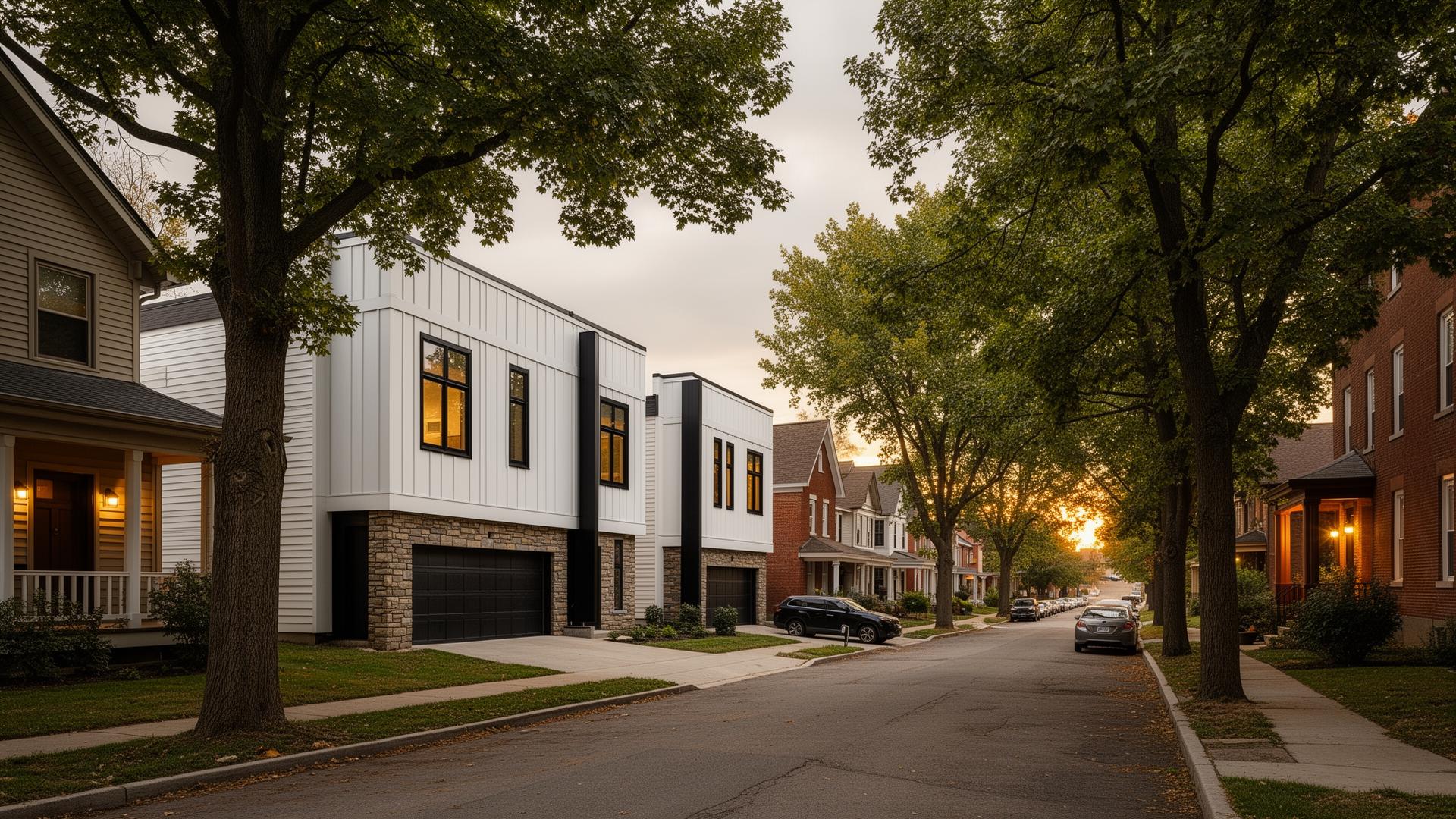
Activity is concentrated in three lanes: light value-add single-family in stable working-class neighborhoods, small multifamily repositioning in the inner-ring suburbs, and ground-up infill on the thousands of buildable lots controlled by the Cuyahoga Land Bank and adjacent municipal inventories. Each lane rewards different operator skills — and different capital structures.
Renovation vs. Ground-Up Development
For an investor allocating fresh capital to Northeast Ohio in 2026, the most consequential decision is rarely which neighborhood — it's renovate or build new. Both can work. Neither is universally superior. The matrix below is how we walk clients through the trade-off, factor by factor, before a single dollar is committed.
Amanah Consulting · Project Analysis
Renovation vs. Ground-Up Development
Northeast Ohio context · June 2026 · Neither approach is universally superior — evaluate project by project
| Factor | Acquisition & Renovation | Ground-Up Development |
|---|---|---|
| Acquisition cost | Lower upfrontDistressed urban properties often $15K–$80K | Lot cost variesLand Bank parcels near zero; others at market rates |
| Construction cost | Highly variableCosmetic $40–$80/SF · Full gut $100–$160+/SF | $125–$210/SFNE Ohio new multifamily (2025–2026 estimates) |
| Scope risk | HighConcealed conditions, lead, structural surprises common | LowAll systems new; scope defined from day one |
| Utility systems | InheritedAging plumbing and electrical often require replacement | All newModern sizing, current code, no legacy risk |
| Energy efficiency | LimitedHard to achieve modern performance in older envelope | SuperiorModern insulation, windows, HVAC — lower bills |
| Maintenance | Higher long-termRenovated systems have shorter remaining life | Lower initialNew systems under warranty; cycles reset |
| Tenant appeal | VariesHistoric character can attract; older layouts may not | StrongModern layouts, in-unit laundry, open plans |
| Layout flexibility | ConstrainedStructural walls and footprint limit redesign | Full controlOptimized unit size and configuration |
| Long-term durability | ModerateDepends on original structure quality and scope | High40–50+ year service life at quality standards |
| Financing | More familiarTraditional acquisition-rehab lending well-established | More complexConstruction loans, appraisal gaps, delays |
| Scalability | LimitedEach property requires individual assessment | HigherRepeatable design scales with decreasing cost |
NE Ohio context: Custom residential construction runs $120–$210/SF in the region — approximately 12% below national averages. A comprehensive gut rehabilitation can approach $130–$160/SF without the lifecycle advantages of new construction. Appraisal gaps (where newly built properties appraise below replacement cost) remain a structural obstacle to ground-up development in many NE Ohio submarkets.
How we read it
Renovation wins on entry cost and financing familiarity. Ground-up wins on scope certainty, energy performance, layout flexibility, and long-term maintenance economics. The right answer is project-specific — but at portfolio scale, operators who can credibly do both consistently outperform single-strategy peers, because they can move capital to wherever the spread is.
Grants and Development Incentives
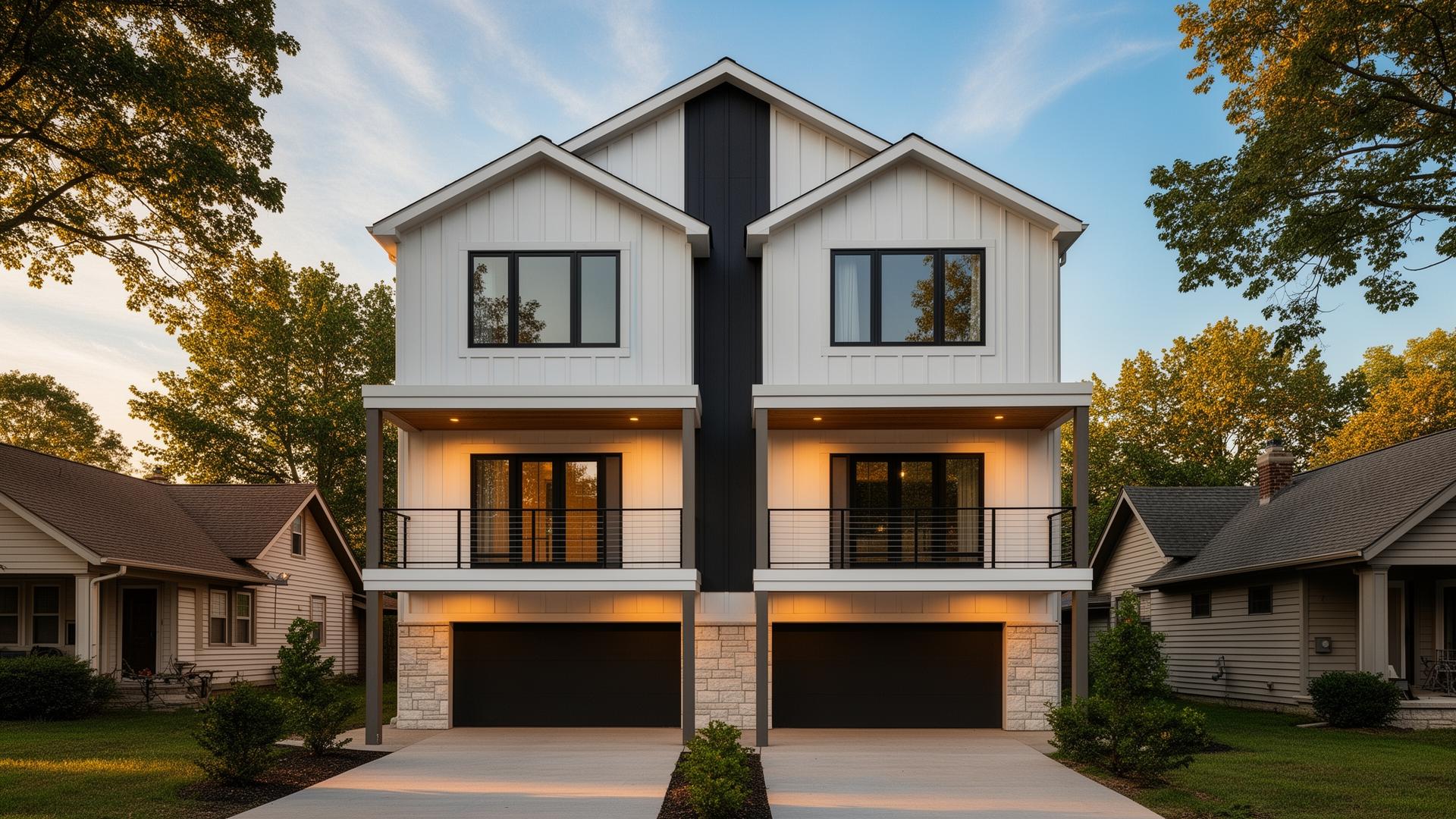
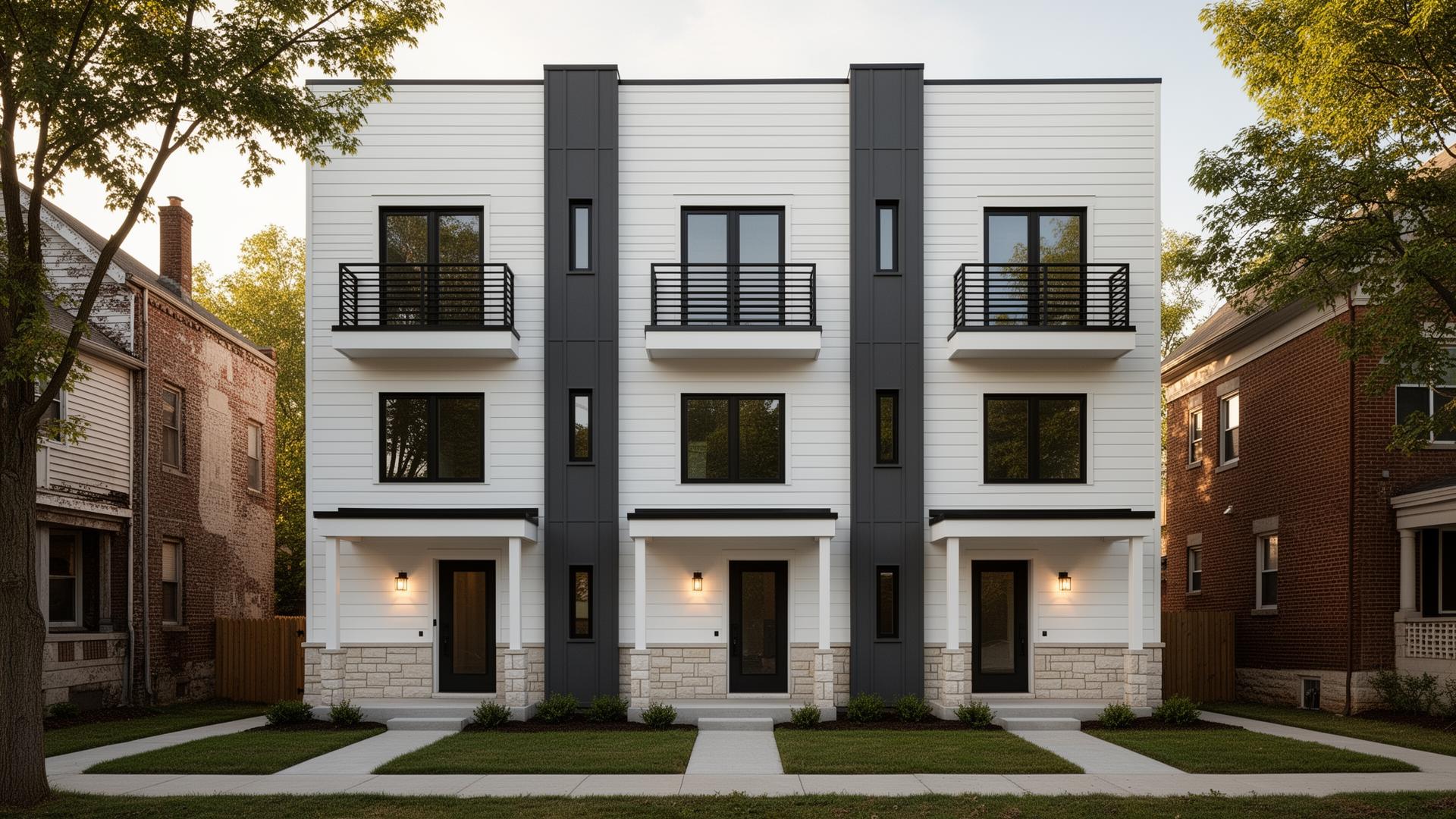
Northeast Ohio's incentive landscape is the most underappreciated part of the regional thesis. Used in isolation, no single program transforms an underwriting. Stacked correctly, they routinely move a project from marginal to clearly viable. The programs below are the ones that show up most often in our active pipeline.
Amanah Consulting · Incentive Landscape
Development Grants & Incentive Programs
Northeast Ohio · June 2026 · Verify all program terms with applicable administrators before underwriting
Cleveland CRA Tax Abatement
85–100%for 15 years
New construction: up to $350K improved value. Rehabilitation: up to $450K. Updated Jan 1, 2024 under Ord. 482-2022. Multi-family requires affordable set-aside units.
Ohio Opportunity Zones
Up to 10%state income tax credit
Program made permanent by July 2025 legislation. Existing zones end Dec 31, 2026; new designations take effect Jan 1, 2027. $25M annual state award cap. Consult qualified tax counsel.
Cuyahoga Land Bank
Up to $100Kper property
Housing Construction Municipal Gap Grant for 1–4 unit new construction or rehab. Low-cost land acquisition. ARPA-funded programs in Wards 5, 10, 14. $3.6B economic impact since 2009.
Age-in-Place Abatement
100%for 15 years
Full abatement for new 1–3 unit construction meeting 66 accessibility standards. Values up to $450K. Applies to qualifying new construction; all units in 2–3 unit buildings must fully comply.
HOME Program / OHFA
Below-marketgap financing
HUD HOME funds administered locally for affordable housing at or below 80% AMI. OHFA financed $1.3B+ in loans in the most recent fiscal year. Income and rent restrictions apply.
LIHTC (OHFA)
Dollar-for-dollarfederal tax credits
Low-Income Housing Tax Credits for larger-scale affordable multifamily development. Best applied at 15–20+ unit scale. Requires syndication expertise and ongoing compliance monitoring.
Incentive stacking is the rule, not the exception. The most viable urban infill projects in Northeast Ohio frequently combine multiple layers — CRA abatement + Land Bank acquisition + CDFI construction financing + Opportunity Zone equity, for example. Assembling these layers requires current program knowledge and project management discipline. All incentive assumptions must be verified with applicable administrators before incorporation into project underwriting.
“Incentive stacking isn't a tactic. In Northeast Ohio infill, it is the difference between a project pencilling and not pencilling.”
Risks We Are Watching
Three variables sit at the top of our 2026 watch list. None is crisis-level. Each is worth modelling into next year's underwriting.
- Insurance pricing. Carriers continue to re-rate the Midwest after several years of catastrophe losses elsewhere; expect continued premium increases on older roofs and frame structures.
- Property tax reassessments. Cuyahoga County's reappraisal cycle has lifted assessed values in several inner-ring submarkets — material for any pro forma carrying a long hold.
- Skilled-trades labor cost. Wage pressure on electricians, plumbers, and HVAC remains the single largest swing factor in renovation budgets.
What We're Watching Next
The structural story — affordability, rent dynamics, incentive depth, a stable rental base — is intact. The tactical story for the next twelve months is execution discipline: tight scopes, conservative contingencies, and a clear-eyed read of which incentive layers actually apply to a given parcel before it is acquired.
Development Consulting
Interested in Exploring Development Opportunities?
We work as owner's representatives for investors evaluating renovation, ground-up infill, and incentive-stacked development projects across Cleveland and Northeast Ohio. Tell us what you are trying to build and we'll show you what is buildable.